
Start with the visitor journey
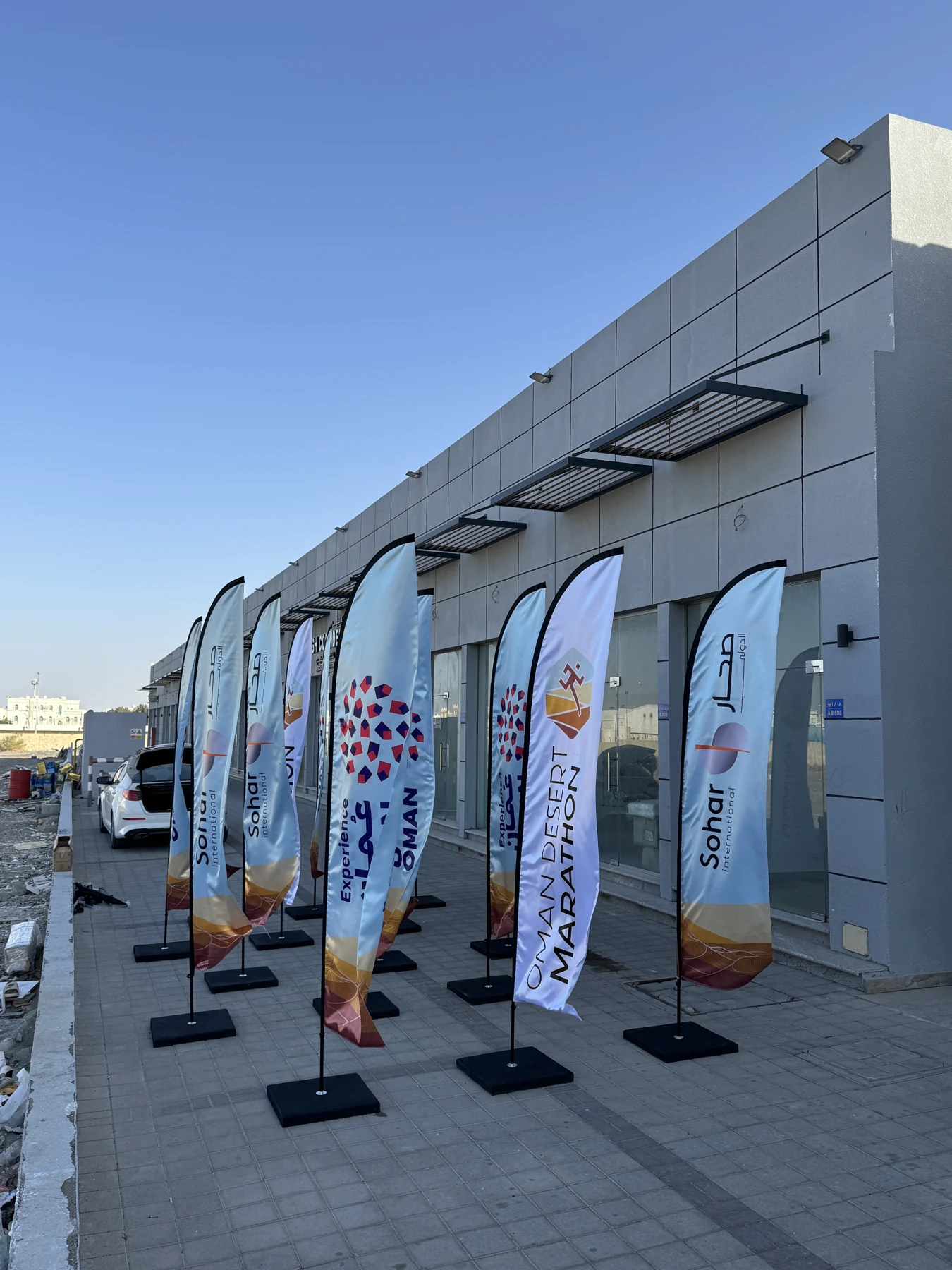
Event flags are most useful when they help people understand the space. A visitor arriving at a festival, exhibition or sporting activity may need to identify an entrance, recognise the organiser or find a specific area. Beach flags provide a tall, portable format for these visual cues. Before choosing colours or quantities, sketch the route from arrival to registration and then to the main activity. Decide where a flag would answer a real question for the visitor.
Give each group a clear purpose
Use a consistent design for flags that perform the same role. Entrance flags can carry the event identity, while another group may highlight sponsors or a particular activity. Avoid placing every sponsor and every instruction on every flag. A simple hierarchy makes the display easier to understand and helps photographs look coordinated. If Arabic and English appear together, allow enough space for both languages and review their reading order in the artwork.
Use spacing to create rhythm
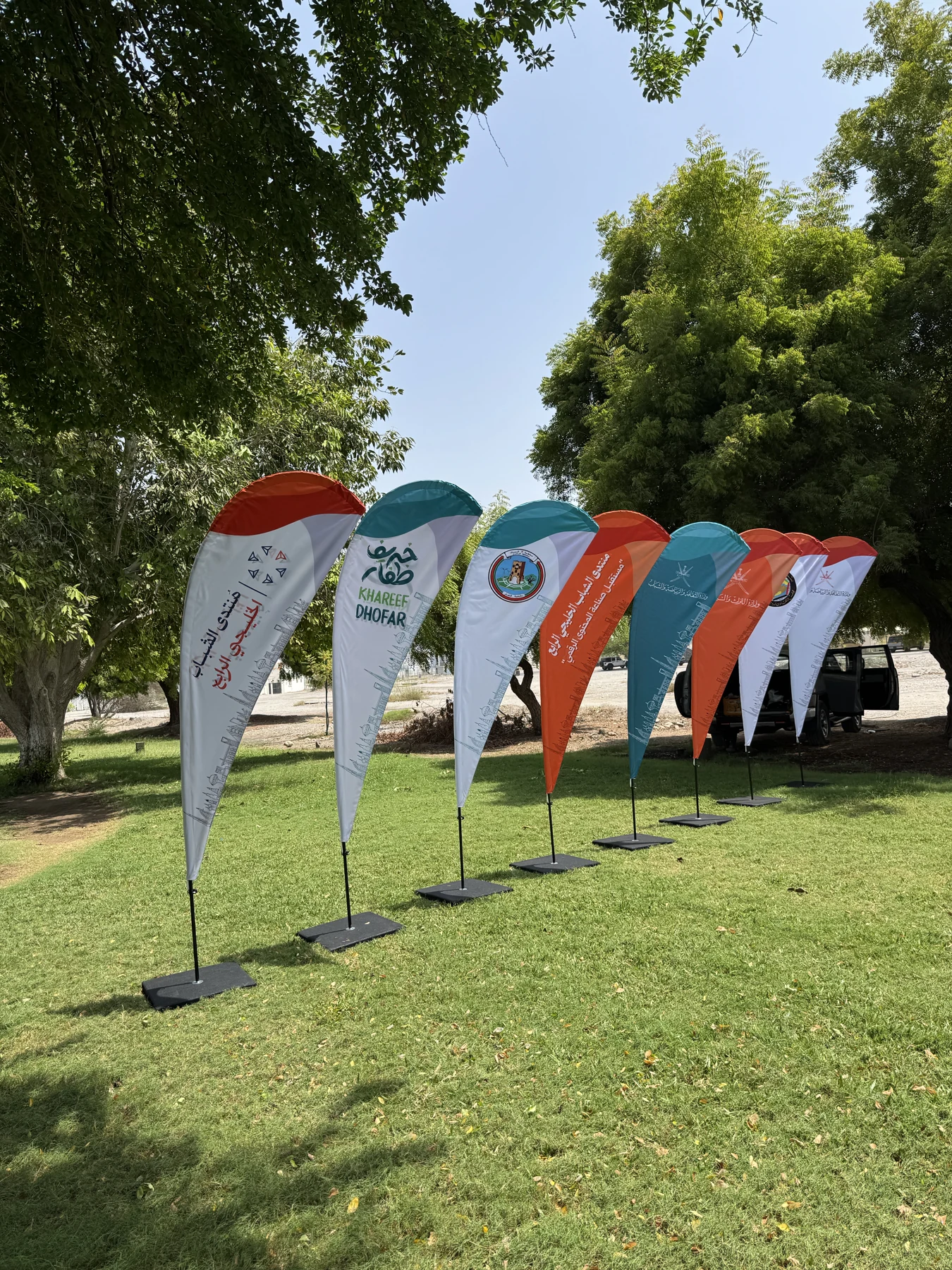
A row of flags can define an approach or frame an open area, but the spacing should suit the site. Consider the full width of the moving fabric as well as the footprint of each base. Leave access routes clear and discuss placement with the venue team. Where several designs are used, repeat the sequence deliberately rather than arranging colours at random. The result should guide the eye without creating an obstacle or concealing other signs.
Plan for reuse after the event
Consider whether the artwork will still be useful next month. A general brand design can serve more than one occasion, while a date-specific flag suits a particular campaign. Keep an inventory of poles, bases and fabric panels so each part can be checked before the next installation. Ask about replacement fabric for compatible systems. Store components according to the supplier’s guidance, and review the condition of all hardware before putting a reused display back into service.
Preparing artwork and specifications
Before requesting a quotation, collect your logo, brand colours and any wording that must appear on the flag. Send a vector logo when available, or the highest-resolution original image you have. A screenshot can help explain the idea, but it may not contain enough detail for clean printing. Tell the team whether the flag will be viewed mainly from one direction or from several sides, and ask which printing and finishing options suit that use.
What to include in your enquiry
Share the product type, approximate size, quantity, intended location and the date you need the order. A photograph of the display area helps explain available space and nearby furniture, doors or walkways. Ask the team to confirm the fabric, pole, base, finishing and what is included in the quotation. If you already own hardware, send photographs and measurements before ordering replacement fabric; compatibility should be checked rather than assumed.
From design approval to delivery
Review the design preview carefully, including spelling, logo proportions, colour choices and the position of important details. FlagCity starts production after final design approval and deposit payment. The website gives a typical preparation time of two to five working days, depending on specifications, quantity and workload; delivery is separate. Confirm the schedule for your particular order before planning an installation or event.
Request a tailored quotation
Contact FlagCity in Al Khoud, Muscat, with your artwork and requirements. Delivery across Oman can be discussed according to the destination and order. The team can help you compare a complete display with fabric-only replacement where suitable. Start with the place, purpose and message, then select the format that makes those details clear.